The Hidden Depths: Understanding Beyond Assumptions
We’ve all done it, we’ve formed a quick opinion about someone based on how they look, speak, or behave. But what if we paused before jumping to conclusions? What if we chose curiosity instead of judgment?
The Value of Curiosity
It is common practice to form rapid judgments about individuals based on superficial observations. However, considering a deliberate pause before drawing conclusions is crucial. Opting for curiosity over judgment reveals underlying narratives.
At POAC Succeed, we instruct both students and staff to delve into deeper understanding.
Ask Questions over making assumptions.
Rather than resorting to labeling, engage actively in listening.
In lieu of assuming negative intent, seek to understand the context behind the behavior.
This approach facilitates the breakdown of barriers, the enhancement of empathy, and the mending of relationships, as individuals choose to acknowledge the entirety of a person, not just surface traits.
At POAC Succeed, it is our conviction that each student, educator, and community member possesses a complex background, with the majority of it remaining unseen.
Beyond Assumptions Cont ..
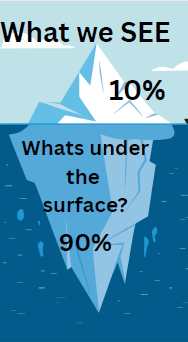
At POAC, we teach that what we see on the surface is often only 10% of a person's story. The other 90% is their experiences, fears, dreams, struggles, and needs that remains unseen.
When we rush to judgement, we respond to the 10%. When we pause and practice compassion, we begin to learn the 90%. We are not here to fix anyone.
We are here to:
Pause before judging
Become aware of our own thoughts
Seek understanding instead of assumptions
And choose connection over conclusions
Why Assumptions Can Be Harmful
Assumptions often turn into labels
Labels create distance
Distance leads to exclusion, shame, and isolation
And no human being wants to feel embarrassed or misunderstood
When we assume, we decide a story without ever hearing it.
Our Shared Responsibility
Every classroom, hallway, lunch table, home, and workplace is shaped by the choices we make in small moments. When we interrupt assumptions and choose awareness instead, we:
Protect one another from emotional harm
Build cultures of belonging
And teach students how to be compassionate leaders not silent bystanders
POAC Truth
You don't have to fully understand someone to treat them with dignity.
You just have to be willing to pause.