
If Parents Only Knew: A POAC Student Experience
As a former teacher, principal, and now someone who works alongside schools every day through POAC Succeed, I’ve learned there are parts of education most people never fully see.
We see lesson plans. We see organized classrooms. We see teachers standing at doors greeting students. All things you would expect with good teachers. What we often do not see is the emotional weight educators quietly carry all day long. Recently, a teacher shared a conversation with me that has stayed heavy on my heart because the story she shared about a little girl was the exact same experience that I had as a child.
A Moment That Changed Everything
During one of our sessions, we had just finished a lesson on how to support a friend in a time of need. We were working with students on the understanding that everyone has a different way of responding to situations and that it is important for us not to judge others on ways that people express their emotions. In our POAC sessions we open doors to conversations around different ways to respond when someone is reacting in a way that is “weird.” We (meaning anyone who has experienced a POAC session) have come to the agreement that weird really just means different from what “I” or the “majority” find “normal.” We teach students that there are TWO emotions no human being ever wants to experience; embarrassment and shame. This has been one of the most powerful things we teach and here is why…
The teacher continued to share that after we had finished our POAC session that afternoon that a student stayed behind while everyone ran out to recess. The teacher asked if she was okay and the little girl began to cry. She immediately said she was sorry for crying and “was so embarrassed.” The teacher of course hugged her and told her she had nothing to be embarrassed about and they reviewed some of the things we had recently discussed in our session.
The student went on to share with her teacher that she wanted to know what to do if someone in her home was shaming her. The teacher asked if she was comfortable sharing more. That particular POAC session we had watched a clip from the movie Inside Out about emotions and how to help someone who is sad. The little girl began crying as she shared that she isn’t allowed to cry at her house. She stated that she is called a baby and oftentimes sent to her room for being “too emotional.” The teacher noticed that this same student seemed to also have habitual stomach aches and tended to be having more emotional outbreaks lately.

A Note for Parents
(PARENTS-before you begin stressing about what your child says at school-PAUSE and keep reading.)
These scenarios to some degree are happening everyday in classrooms but if we set aside judgement and observe through the lens of compassion this family likely believes they are teaching their child to be strong and resilient in a world that can be harsh and insensitive but I offer a little deeper reflection…
Why Emotional Validation Matters
I’m sure everyone is aware that anxiety and depression in children is on the rise. Research in child development, psychology, and neuroscience consistently shows that emotions themselves are not the problem, children need help learning how to express and regulate emotions in healthy ways, not shame for having them. When a child is repeatedly told things like “Stop crying, ” “You’re acting like a baby, ” “You’re too emotional, ” or even to “Toughen up, ” they often learn that emotions are unsafe, embarrassing, weak, or unacceptable rather than learning how to manage them appropriately. Researchers sometimes refer to this as emotion invalidation or emotional dismissiveness. Children may begin suppressing emotions instead of regulating them which can cause long term issues. Studies have linked chronic emotional invalidation to increased anxiety, depression, shame, emotional dysregulation, low self-worth, difficulty trusting others, and physical symptoms like headaches or stomachaches.
How Emotions Show Up in the Body
The important thing to remember is that the body still carries emotions even when we stop expressing them. Research on stress and trauma shows that unprocessed emotions can show up physically through stomach pain, sleep issues, irritability, headaches, hypervigilance, or emotional outbursts later. Sound familiar in this scenario? So what can we all do about this?
What Educators Can Do
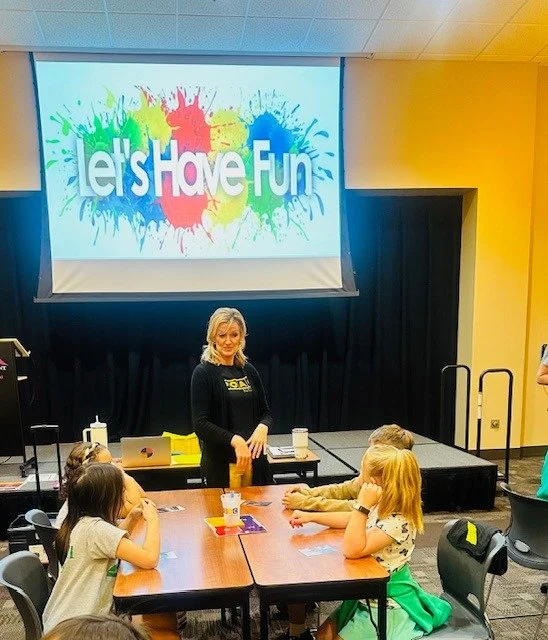
This is especially important not only for parents to know but also for educators because many students who appear “fine” during the school day may actually be carrying significant emotional stress internally. When children go through suppression of their emotional expression, they may begin to believe their feelings don’t matter, but overtime, this can impact trust and emotional security within relationships. As educators, we can help students learn to label their feelings and self regulate with coping skills. We can also help normalize “feeling” their emotions. Students need adults to model these.
Healthy Ways to Handle Emotions
“I can see you’re upset.” “Your feelings are okay.” “Let’s work through this together.” “How can I best support you right now, or what do you need right now?” “Would (the calming corner to process your feelings) help you? teach this skill early on in the school year”
Children gradually learn emotional regulation through co-regulation with calm adults and believe it or not, they will begin to use these skills in their everyday life once they are consistently used at school.
Modeling Self Regulation
“Class, I am frustrated right now and want to take a moment to gather my thoughts. Please take a moment and quietly think about what just happened and we will reflect together.”
“(students name), I know you are feeling frustrated right now for____ and when I am frustrated here is something I do to help myself: I take 5 deep calming breaths and recite in my head I am okay.” This helps me to pause before I react in a way that I feel bad about later.

A Message to Parents
Parents-back to you…research does not suggest that parents are intentionally harmful. Many adults were raised the same way and may believe they are teaching toughness, resilience, or emotional control because that is what they experienced themselves. In many families, emotional suppression is generational. As mentioned above, this was my experience and it has taken years of relearning new skills to help me be a better parent and educator.
The important thing to model with children is also the ability to apologize when we didn’t respond in a way that we now know is not healthy. Owning your impact is a big part of our POAC strategies and apologizing is a perfect example of owning your impact. My passion is to help as many people as possible realize that we are all imperfectly perfect! We need to hear that we are not alone and are also doing the best we can with what we know but as Maya Angelou once said “Once you know better, do better.”
—Dr. Tracy Platt
KEEP THE INSPIRATION GOING

Dr. Tracy Platt President of Educational Strategies, POAC Succeed
About the Author
Dr. Tracy Platt is an experienced educator and leader who has spent more than 25 years supporting students, staff, and school communities. Her work focuses on trauma awareness, student behavior, and building systems that help people feel safe, valued, and connected. Tracy has served as a teacher, principal, and district leader, and she now guides POAC Succeed’s educational strategy with clarity and compassion. Her writing reflects her commitment to helping students understand themselves and feel seen in their school environment.

Behind every lesson and every smile is a human being carrying a story. Teachers show up for students while quietly navigating their own invisible weight. This piece reveals what educators carry and why seeing them fully matters.
Image Credit: Nicola Barts